
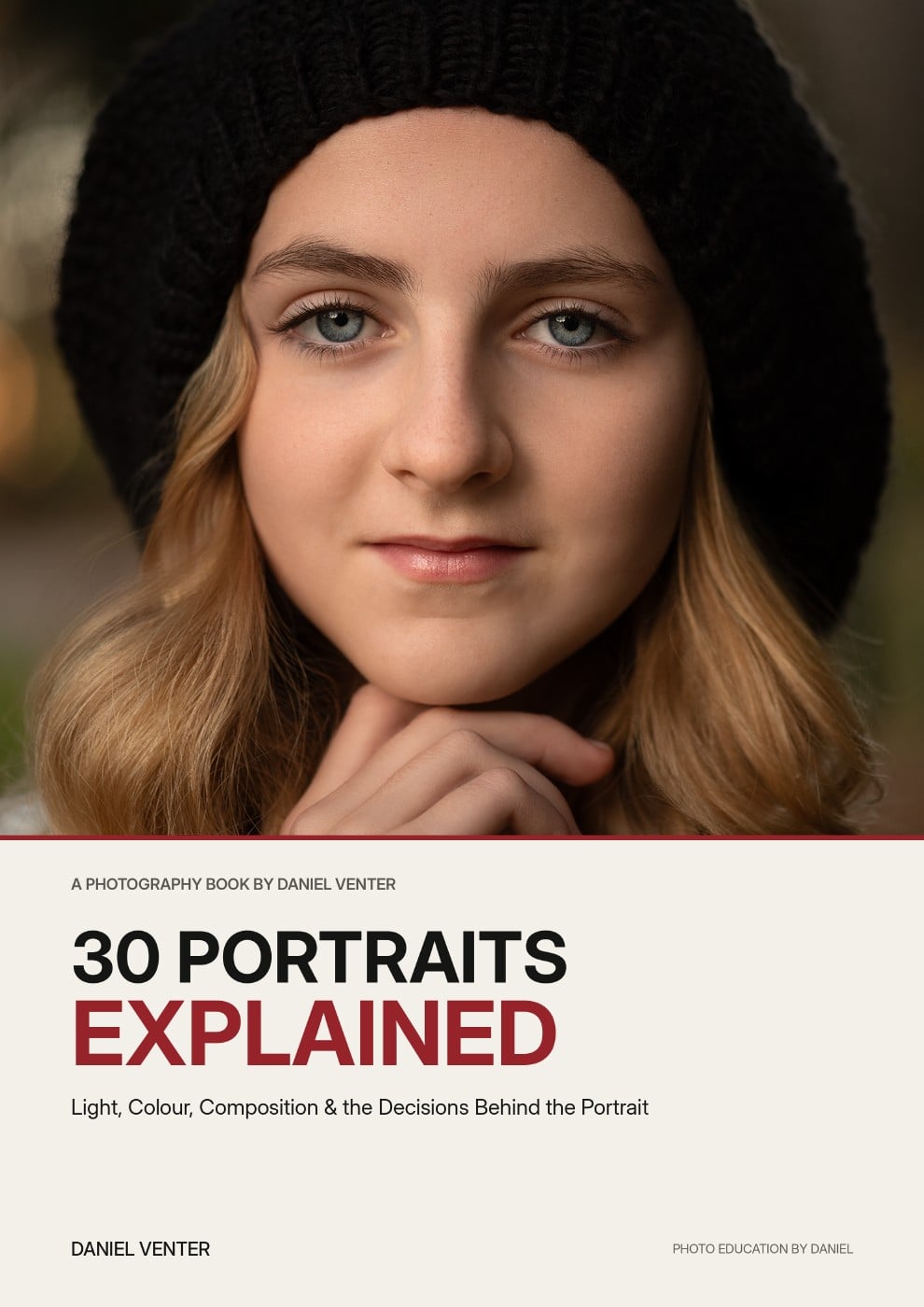
30 Portraits Explained
Why do some portraits feel finished before the edit?
You find a spot that looks promising, take the shot, and something is missing. The light is flat, the background pulls the eye away, the colours don’t belong together. This book walks you through thirty of my portraits, one decision at a time: what I saw, what I did, why it works, and the settings.
Digital PDF ebook$29
THE CENTRAL IDEA
The settings matter less
than the decisions.
Most of what photographers are taught starts with aperture, lenses and editing. Those details matter, but when I look back at my best portraits, the settings were never what made them work. The light had direction, the colours belonged together and the subject stood in the right place. Nobody handed me that. I learned it by looking harder, one portrait at a time.
This book starts earlier: where the light came from, why the subject stood there, how the background was controlled, which colours repeated or contrasted, why the camera was placed at that height, what the focal length contributed, which compromises were made and what the final edit was designed to reinforce.
The aim is to sharpen your own judgement, not to hand you a recipe.
In 2013 I left an IT job in London and moved to a Czech village with no local reputation and no Plan B. The photographs had to speak before I could. By the end of that first year I had photographed more than 100 clients. This book is what that habit of looking harder taught me.
INSIDE THE BOOK
See the thinking behind each portrait.
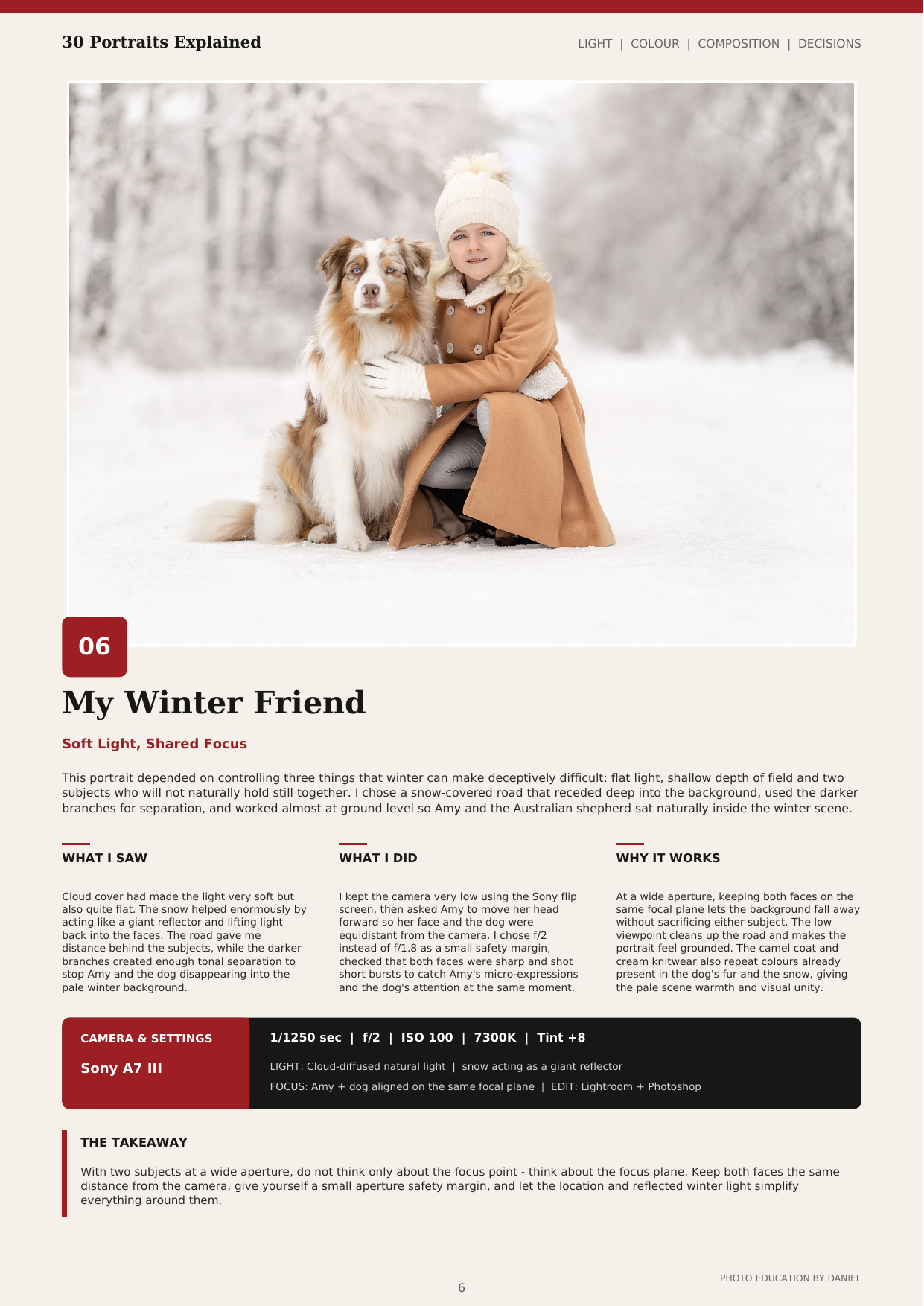
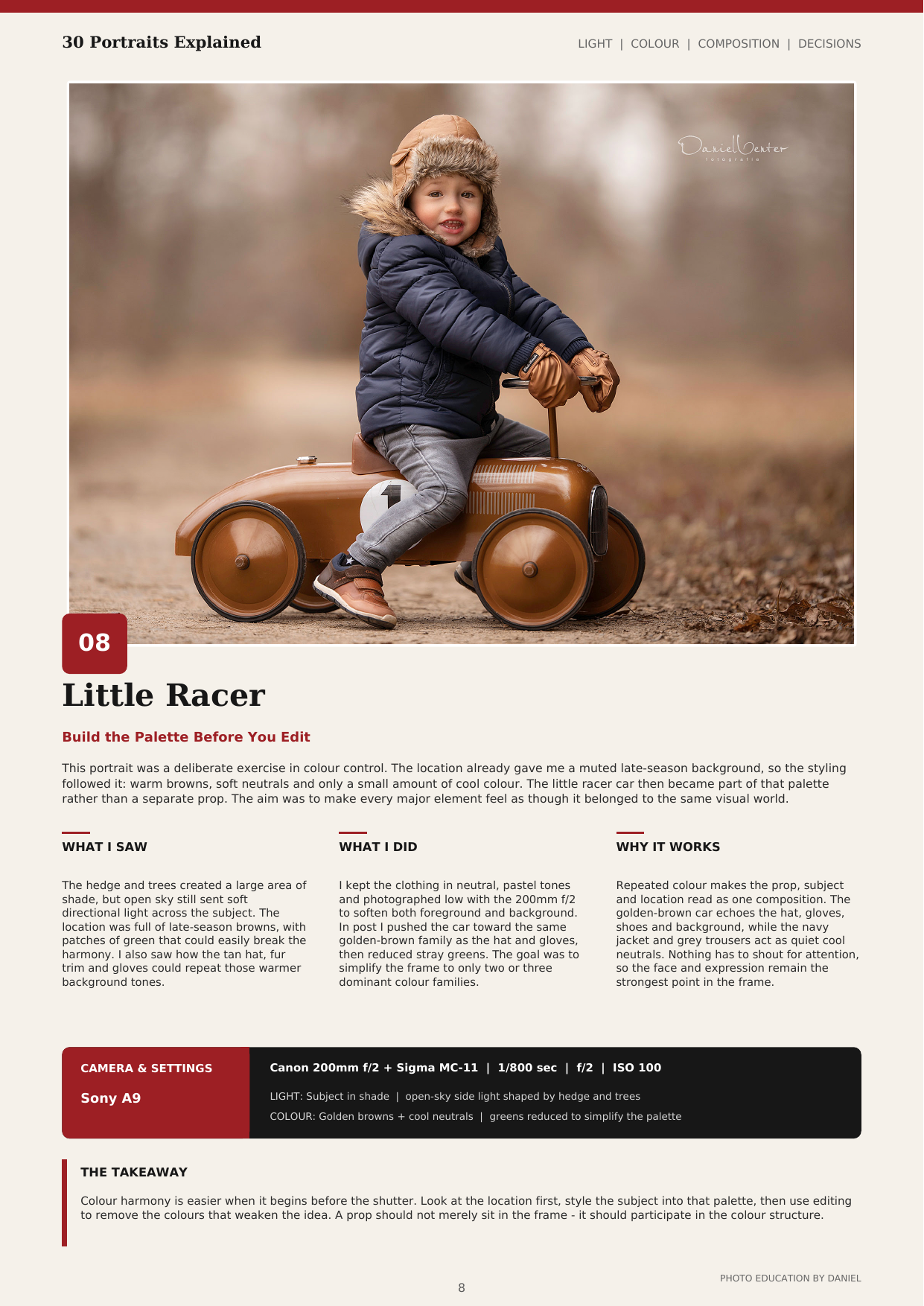
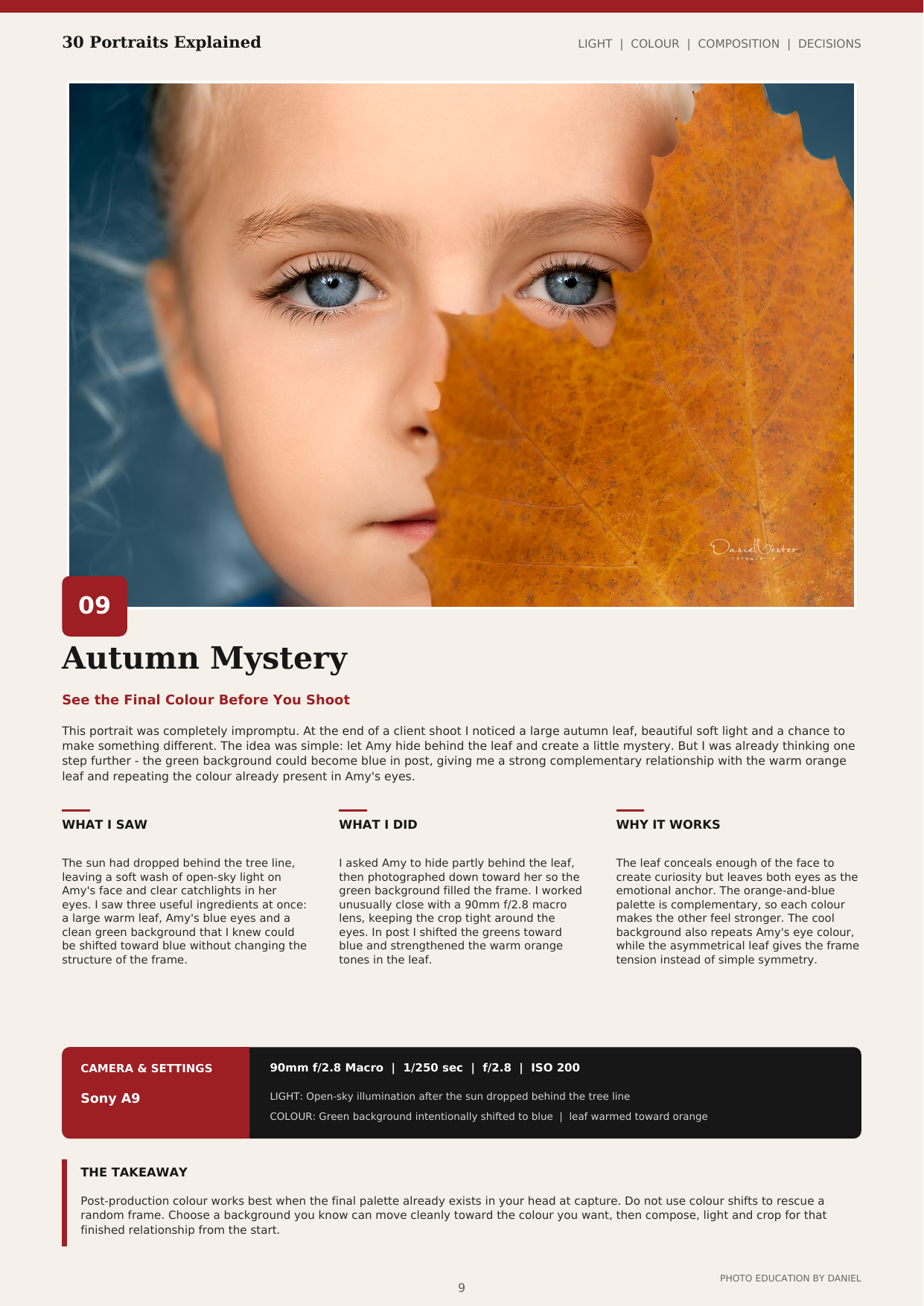
A small preview of the visual decisions inside the book.
THE FOUR TEACHING PILLARS
LIGHT COLOUR COMPOSITION DECISIONS
LIGHT
Where it comes from, how it is shaped and what it is doing to the face.
COLOUR
What repeats, what contrasts, what belongs and what distracts.
COMPOSITION
Camera height, focal length, background, space and subject placement.
DECISIONS
The judgement connecting location, subject, capture and final edit.
WHAT YOU WILL LEARN
What the thirty portraits
teach you
Each example turns a finished photograph into practical visual judgement you can apply in your own locations.
- Use open sky as directional portrait light.
- Match wardrobe to a location before shooting.
- Build colour harmony between subject and environment.
- Use complementary colours deliberately.
- Control backgrounds through focal length and camera position.
- Keep multiple subjects on the same focal plane.
- Use snow as both composition and reflected light.
- Know when a wide aperture creates more problems than benefits.
- Make studio light feel natural.
- Find useful light inside imperfect real-world locations.
- Use long lenses as compositional tools, not just blur machines.
- Let post-production colour refine rather than invent.
WHO THIS IS FOR
For photographers who want to understand why a portrait works — not simply copy how it was shot.
For serious hobbyists and working photographers photographing families, children, maternity, couples, weddings, studio work and personal portrait projects.
More deliberate decisionsStronger visual consistencyBetter control of lightCleaner backgroundsStronger colour relationshipsMore intentional compositionGreater confidence before the shutter

ABOUT DANIEL
Real portraits. Real shooting situations.
Daniel Venter is a portrait photographer and educator. He established his photography business in 2013 after leaving an IT career in London and has taught photographers since 2018.
His teaching is grounded in the decisions he makes on real sessions: reading natural light, building colour relationships, controlling composition and recognising what an edit should reinforce.
WHAT YOU GET
30 complete portrait breakdowns
Each portrait covers the key choices behind the image.
What I SawWhat I DidWhy It WorksCamera & SettingsThe Takeaway
A professionally designed digital PDF ebook for photographers who want to see beyond settings and make stronger creative decisions.
THE POINT OF THE BOOK
Why this isn’t a book of recipes
The goal of this book is not to make your portraits look like mine. It is to help you look at your own locations, light, colour and subjects with more intention — and make stronger decisions before you press the shutter.
Picture your next session. You arrive, read the light, place your subject and know what the frame needs before you shoot. Thirty worked examples are how that starts.
CONTINUE THE STUDY
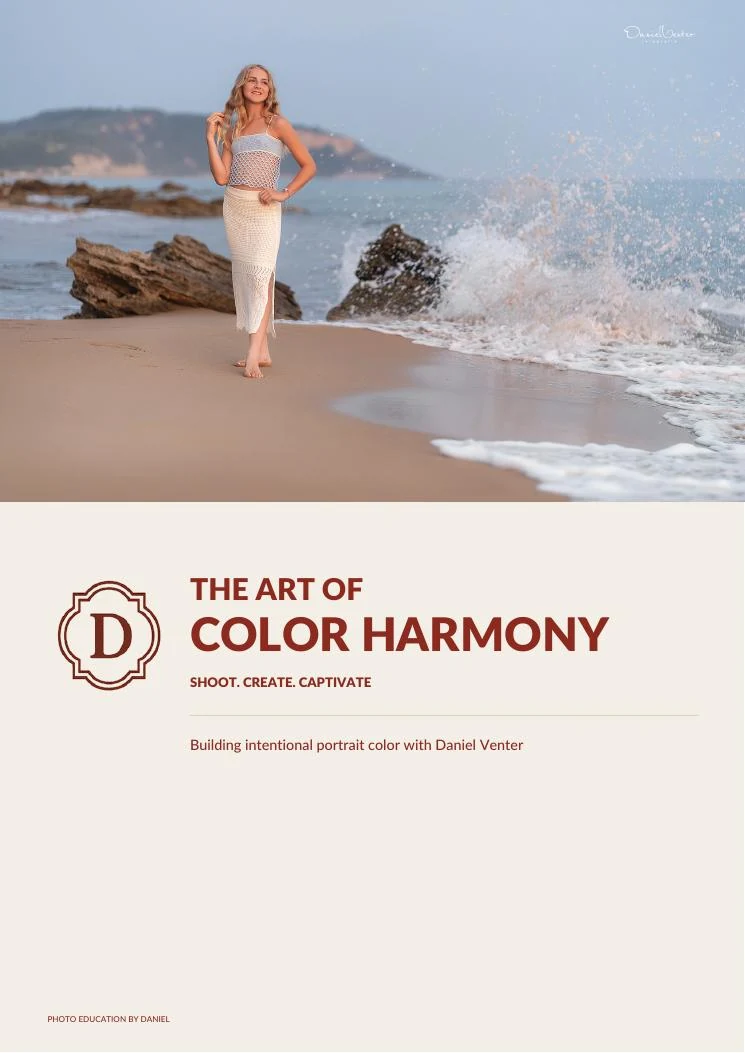
The Art of Color Harmony
Twenty portrait studies showing how I build colour into a portrait through light, location, wardrobe, white balance and the edit.
$39
FAQ
Questions before you begin
Is this a physical book?
No. It is a digital PDF ebook.
Is it just camera settings?
No. Settings are included for context, but the focus is the creative and technical decision-making behind each portrait.
What level of photographer is it for?
Photographers who understand the basic operation of their camera and want to develop stronger portrait judgement. It is relevant to both hobbyists and professionals.
What kinds of portraits are included?
A mixture of children, family, maternity, couples, wedding, studio and environmental portrait examples.